The goal is for the fluid systems to move, but reliable movement requires control over where the fluid will not move. Such protection is ensured by the use of a check valve, which stops the flow from going back. The problem for a check valve supplier is to comprehend the pressure, flow direction, material, installation conditions and application requirements well enough to be able to supply a component to protect the system.
One-Way Flow Is a Design Problem
A check valve can function without any external control. It has an internal element that is sensitive to changes in flow and pressure.
If the pressure is strong enough in the desired direction, the valve opens. The closing element is pushed towards its seat, and then it restricts the reverse flow when the pressure relationship changes.
This is a principle that must be controlled. If the valve is not closing quickly enough, there can be reverse flow. Hydraulic effects could become an issue if the closing is too aggressive.
Pressure Difference Drives the Action
The principle of behaviour of the check valve is differential pressure. The valve is supposed to lift when the forces that are pushing it down are not strong enough, which is usually expressed as the cracking pressure.
To choose the proper operating characteristics, it is necessary to know the normal and minimum flow conditions. If the valve is poorly matched, it can stay open or close unnecessarily, or not close as it should.
Pressure analysis is, therefore, an aspect of application matching for a pressure valve supplier.
Backflow Has Real Consequences
Reverse flow may occur in pumps, compressors, pipelines, storage systems, and process equipment.
Rapid flow direction changes in liquid systems can help cause water hammer or pressure transients. In other uses, the reverse motion may lead to contamination or to unwanted mixing or loss of process control.
The check valve is thus a protection device in an overall engineering system.
Valve Type Must Follow the Application
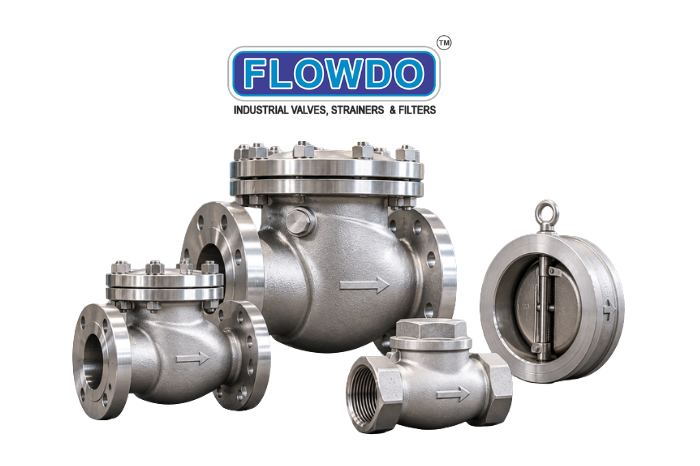
Check valves can be configured in various ways to respond differently to the process conditions. There are different relations of flow resistance, closing behaviour, orientation of installation and maintenance for swing, lift and wafer and other designs.
The supplier should start with the application, not with every requirement being the same.
The installation space available, the flow velocity, pressure, temperature, and type of fluid all have an impact on the right configuration.
Materials Meet the Medium
The chemistry of a fluid must be taken into account when selecting materials, in addition to the operating conditions. A different material strategy may be needed for water service that is aggressive or chemical process media.
Materials must also have appropriate mechanical and sealing characteristics over the expected service life.
Installation Direction Matters
Check valves are one-way valves. They should be oriented in the direction of the intended flow, and there are some installation considerations in some designs.
The system may not function if it is installed with the wrong orientation or may result in resistance or less protection than expected.
Technical information is still a key component of supply.
Cracking Pressure Influences Efficiency
The check valve should be designed to open under a specific delta P. Too much cracking pressure will cause unnecessary resistance and may cause the system to be less efficient.
Lack of closing force, however, can impact reliability.
The valve must allow the desired flow rate without excessive back pressures and ensure reliable protection against reverse flow.
Closing Behaviour Matters
Opening is only half the work. It is equally critical for the valve to close under circumstances where there is a change in pressure relation.
The performance of the system is influenced by the closing speed and motion inside the valve, especially in situations where there are quick changes in flow. Besides, the designers will have to consider the pressure surges and design accordingly.
Testing Builds Confidence
A check valve has to operate in more than ideal conditions. Pressure resistance, leakage, dimensional accuracy, material conformity and functional behaviour can be assessed through testing.
Testing and documentation are the link between the physical product and its engineering specification for suppliers.
If more than one valve is to be used throughout the project, and the same operating conditions are required, consistency is particularly important.
Maintenance Extends Protection
Depending on operating conditions, check valves might need inspection. Repeated cycling, corrosion, deposits and wear may impact internal movement and sealing.
Fluid, operating frequency and failure consequences should be taken into account when planning for maintenance. An accessible inspection valve can make lifecycle management easier.
The Supplier Connects Specification to Reality
A check valve supplier’s duty isn’t just limited to delivery. Engineers and procurement teams can frequently benefit from help in the interpretation of a pressure class, size, material specification, connection standards and application conditions.
If a supplier is familiar with these variables, he or she may be able to assist in specifying the right valve for the process requirement.
That connection helps to minimise the chance of picking the component just because of the nominal size or cost.
Final Words
A check valve supplier’s flowchart starts with a straightforward premise: Let flow go in one direction, inhibit flow in the other. Reliable delivery of that function requires pressure relationship, cracking behaviour, closing dynamics, material, installation, testing and maintenance.
A valve can be small but have a big role to play in a pipeline.
Effective supply is more than just a valve from a manufacturer to a site. It is the knowledge of the flow system to match the proper protection to the flow conditions under which it should be used.